Cohort 2026

Amona Zemon
Amona Zemon is currently engaged with the Institute for Human Rights in Skopje. She previously worked as a Project Officer at the Council of Europe, where she supported the Advisory Committee in monitoring the implementation of the Framework Convention for the Protection of National Minorities, as well as the Committee of Experts in monitoring the implementation of the European Charter for Regional or Minority Languages in States Parties. Her work focuses on the protection and promotion of human rights.
Amona holds a B.A. in Political Science from the Ss. Cyril and Methodius University in Skopje, and is currently completing her M.A. in Southeast European Studies (Politics and Law) at the University of Graz.

Anesa Colakovic
Anesa Colakovic is a distinguished Kosovar leader and "Forbes 30 Under 30" semi-finalist with an extensive global pedigree, including Fulbright and Peace Fellowships. She has spearheaded social development projects across the US, India, and Kosovo, gaining recognition as a disruptive innovator at Stanford University for her commitment to social inclusion.
Her professional career spans elite international organizations like USAID, the IMF, and the European Commission, alongside high-level roles in the Offices of the Prime Minister and President. A true polyglot, Anesa speaks over eight languages and is a dedicated scholar of global heritage, leadership, and community development.
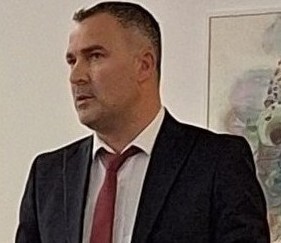
Arbnor Sadiku
Arbnor Sadiku is currently engaged with the Institute for Political and Social Studies (ISPS), where he contributes to policy analysis and governance-related issues. He is also a political analyst featured in several media outlets across Kosovo and the region, covering topics such as foreign policy, European integration, and regional developments. Previously, he served as Acting Director for European Integration and Policy Coordination at the Ministry of Regional Development, as well as in other roles in public administration and regional development. His professional focus includes European integration, regional cooperation, and public policy development. Arbnor holds a Master’s degree in International Policy and Diplomacy.

Armina Sinani
Armina is a Junior Consultant at DEPT Agency, where she advises corporate clients on the ethical and practical integration of AI. Previously, she worked with local corporate and commercial law firms, as well as human rights advocacy organizations, where she provided pro bono legal aid to marginalized communities. Most notably, her career includes drafting two successful applications before the European Court of Human Rights, supporting the civil litigation for families affected by the 2021 Modular Clinic fire, and implementing over 200 projects on behalf of the European Commission in the fields of the judiciary and the rule of law. A graduate of the University of Edinburgh with a Master’s in International Commercial Law and Practice, Armina’s work sits at the intersection of corporate compliance and the protection of human rights in business.
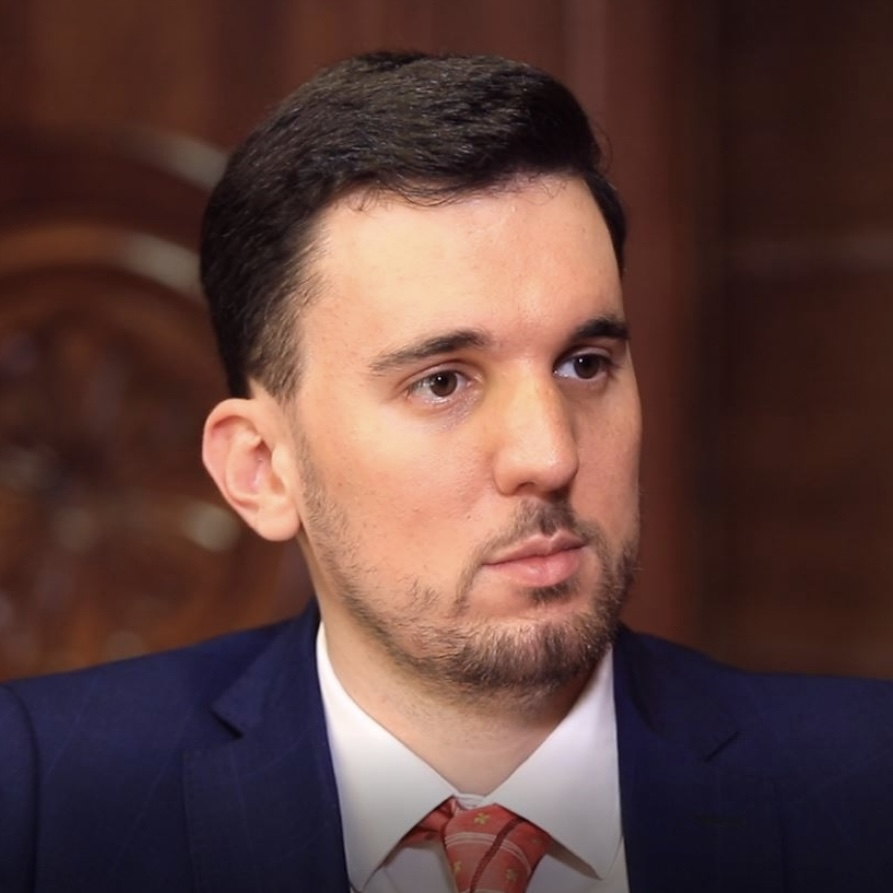
Danilo Kalezic
Danilo Kalezic is a Senior Researcher at the Historical Institute of Montenegro, columnist, and political analyst. His research focuses strongly on foreign malign interference, with particular expertise in Russian influence in the Western Balkans, as well as on democratization, political transitions, and contemporary Montenegrin political history. He has authored numerous studies analyzing external influence operations, hybrid threats, and democratic vulnerabilities in the region. He holds a degree in International Politics and History from Jacobs University Bremen (2016) and completed postgraduate studies at the University of Bremen and Humboldt University in Berlin. He later earned a Master’s degree in Political Science from Northern Illinois University (NIU), becoming the first Fulbright scholar from Montenegro, and pursued doctoral studies in Comparative Politics. Currently a PhD candidate.
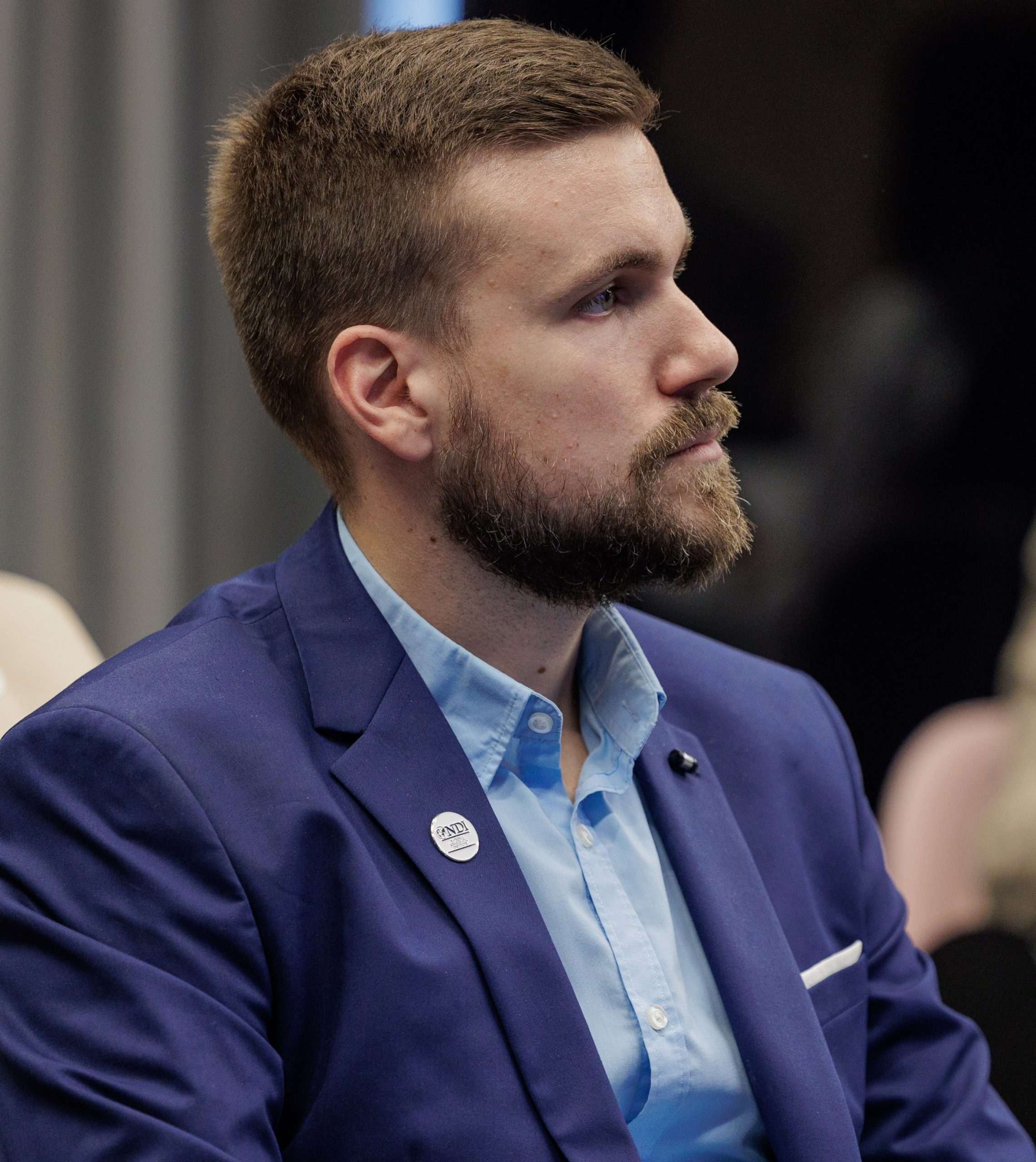
Dimitar Nizamovski
Dimitar Nizamovski is a Project Officer at the International Foundation for Electoral Systems (IFES).
Previously, Dimitar worked as a Program Officer at the National Democratic Institute (NDI), where they led projects on combating corruption in North Macedonia, improving the citizens’ standard of living, and supporting the establishment and functioning of the Inter-Party Parliamentary Group against Corruption within the Assembly of the Republic of North Macedonia.
They have also served as the Executive Director of Youth Educational Forum (YEF), leading one of the oldest and largest youth organisations in the country.
Their work focuses on human rights and freedoms, educational policies and youth initatives, electoral integrity and advocacy.
Dimitar Nizamovski holds a Bachelor of Law (LL.B) degree from the Iustinianus Primus Faculty of Law from the University “Ss. Cyril and Methodius” in Skopje. Having passed all required exams, they are now focused on completing their master’s thesis in Constitutional law.

Gent Salihi
Gent Salihi holds an MSc in International Relations and Diplomacy and serves as a Security Sector Reform Officer at the DCAF – Geneva Centre for Security Sector Governance, specializing in law enforcement and judiciary reform. He has previously held senior public-sector roles, including Secretary of the National Cybersecurity Council of the Government of North Macedonia and Adviser to the Minister. Gent is an alumnus of the Swedish Institute, Council of Europe School of Politics and the Presidential Centre for Political Education, a member of the OSCE Pool of Young Experts, a Young European Ambassador and a member of the EDYN. He is fluent in Albanian, Macedonian, English, and Turkish. He is certified in Project Cycle Management and SSG/R.

Jana Djudjić
Jana is a Young European Ambassador to Serbia and a Final-Year BA Diplomacy student. She is actively engaged in youth participation, climate justice, and environmental advocacy across the Western Balkans. Previously, Jana has contributed to various youth networks and non-formal education initiatives, where she has worked to empower young people to participate in decision-making processes and public dialogue. Her work focuses on strengthening trust between young people and institutions and promoting active citizenship and policy engagement. She is the initiator of the campaign “Invisible, But Most Important’’ supported by the Council of Europe, which raises awareness about air pollution and its impact on communities in the region. Jana is currently completing her degree in Diplomacy at the University of Belgrade, where she combines academic knowledge with practical activism.

Jetnor Kasmi
Jetnor Kasmi is a PhD Candidate in Political Science at the University of Duisburg-Essen, Germany, specializing in democratization, governance, and conflict resolution. He is a former Regional Grants Officer at the International Commission on Missing Persons (ICMP) and a former Advisor to the Prime Minister of Albania, where he provided strategic guidance on foreign policy and regional affairs. He has extensive experience managing complex, multi-stakeholder programs across the Western Balkans, working on transitional justice, rule of law, and post-conflict recovery in collaboration with governments, international organizations, civil society, and donors.
Jetnor holds an Executive Master in Criminology from the University of Tirana, a Master of Development Policy from the KDI School of Public Policy and Management in South Korea, and a BA in Political Science from Methodist University in the United States. His research focuses on institutional reform, democratic resilience, and the role of international actors in supporting sustainable transitions, including work on the Kosovo–Serbia dialogue, transitional justice in Albania, and China’s Belt and Road Initiative in the Western Balkans.

Klajdi Pllaha
Klajdi Pllaha is a practitioner of participatory and deliberative democracy. He serves as an independent member of the Municipal Council of Korçë, Albania, working at the intersection between citizens and decision-makers. Alongside his public role, he is a lecturer in Mathematics with over a decade of teaching experience.
In recent years, his work has focused on Citizens’ Assemblies and other innovative democratic practices at the local level, intending to strengthen meaningful citizen participation in decision-making processes.
Klajdi holds a degree in Mathematics from the University of Bari, Italy, and a Master’s degree in Banking and Insurance.
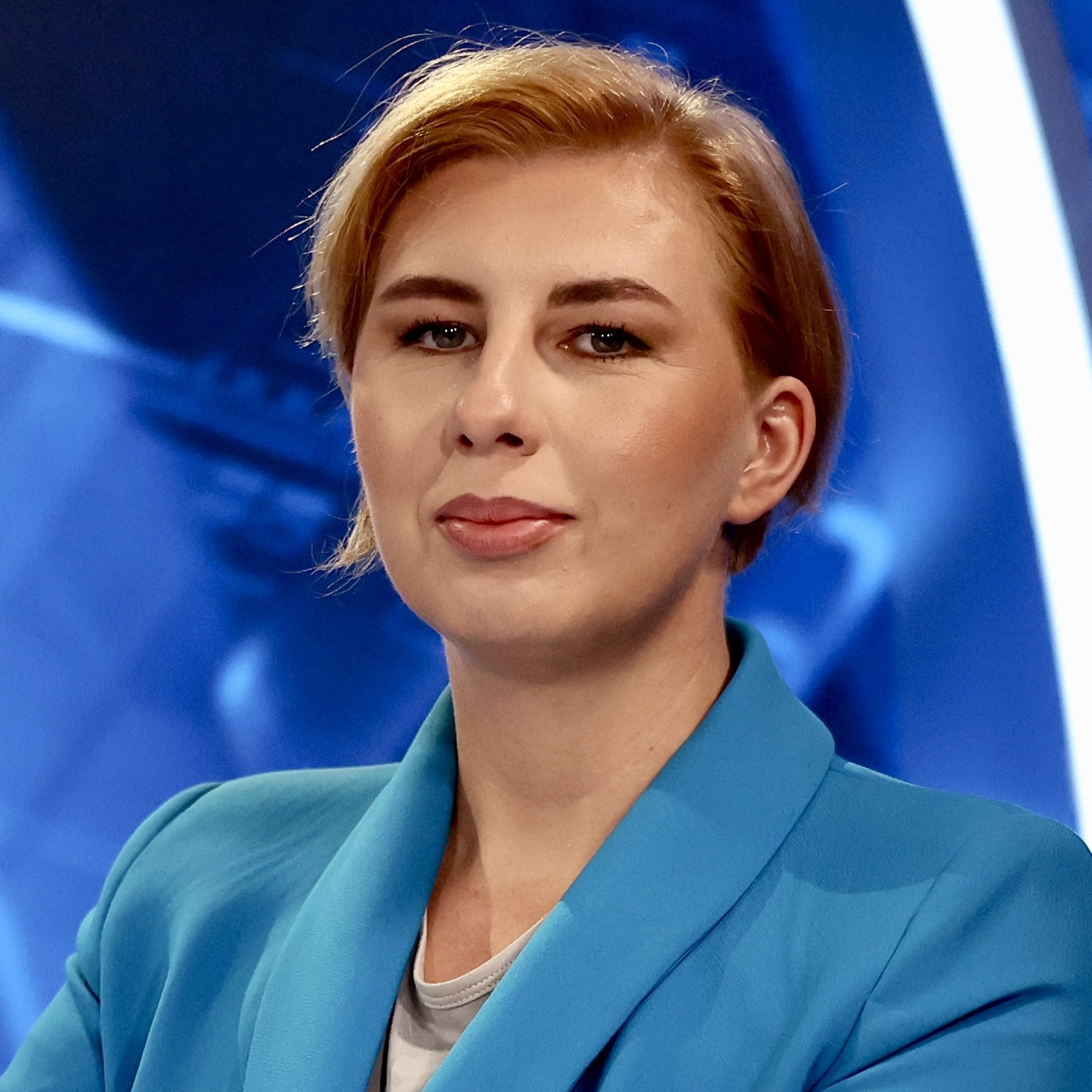
Lejla Nuhanović
Lejla Nuhanović is a Political Officer at the Office of the Head of Mission of the OSCE Mission to Bosnia and Herzegovina, where she analyzes major political, governance, and security developments shaping institutional stability and reform in the country. Previously, she worked as a journalist at the Federal News Agency and N1/Forbes Bosnia and Herzegovina, covering high-level political, economic, and international affairs across the region. Her work focuses on democratic governance, institutional resilience, political risk, and the broader forces shaping stability and state functionality in the Western Balkans. She is a Marshall Memorial Fellow, McCain Global Leaders alumna, and Atlantic Council alumna.

Marija Radulović
Marija Radulović is a human rights and social inclusion expert currently working as a consultant on a range of initiatives in Kosovo and the wider region. Her work focuses on advancing inclusive governance, minority rights, and social cohesion in post-conflict settings, with particular emphasis on community engagement and evidence-based policy development.
Previously, she served as Deputy Ombudsperson of Kosovo, where she led efforts to address human rights violations and strengthen institutional accountability, particularly concerning non-majority communities. She has also advised senior government officials on human rights and governance issues.
Marija holds a Master’s degree in International Relations and has completed advanced studies at the Riga Graduate School of Law. Her professional interests lie at the intersection of human rights, peacebuilding, and democratic governance.
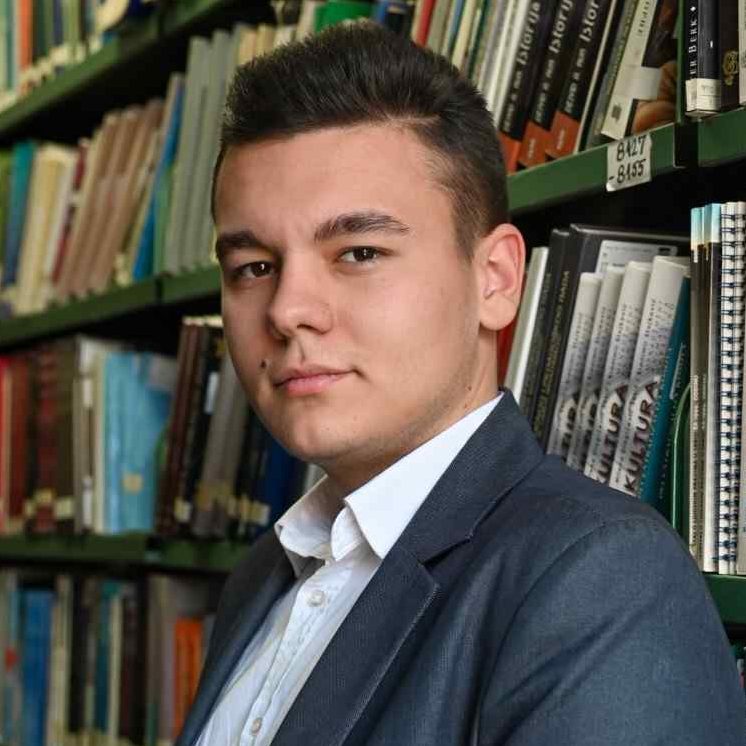
Marko Filipović
Marko Filipović is a Master’s student in Contemporary Balkan Studies at the Faculty of Political Sciences, University of Belgrade, where he also serves as a teaching assistant in subject Contemporary Balkan Relations. His academic interests include foreign policy of small states, regional cooperation in the Western Balkans, bilateral relations in the Western Balkans, the breakup of Yugoslavia and peacebuilding. He has gained professional experience through internships at the Ministry of Justice of the Republic of Serbia (Sector for European Integration and International Projects), the Institute for International Politics and Economics, and through the Western Balkans Internship Scheme for Empowerment in Podgorica. Marko has participated in numerous international programs, conferences, and policy initiatives, including study visits to NATO Headquarters and the European External Action Service. He is a scholarship recipient of the EU Non-Proliferation and Disarmament Consortium, a Board Member of the Youth Forum of the European Movement in Serbia, and a member of the Regional Dialogue Forum in Belgrade. His work focuses on linking regional perspectives with broader European security and cooperation frameworks. He graduated from the Faculty of Political Sciences, University of Belgrade, majoring in International Relations.

Mia Velkovska
Mia Velkovska is currently an Executive Assistant at the Gjorgji Marjanovic Foundation. Previously, she worked as an intern at the President’s Office, followed by volunteering at the Assembly of North Macedonia, where she gained insight into legislative processes and public administration. During her engagement with the OSCE Mission to Skopje, she founded and led the “Post-Traumatic Stress Response in Policing” initiative. Her work explores the intersection of democratic governance, institutional accountability, and the European integration process. Mia holds a Master’s degree in International Relations, European Integration, and Diplomacy, and a Bachelor’s degree in Police Science.
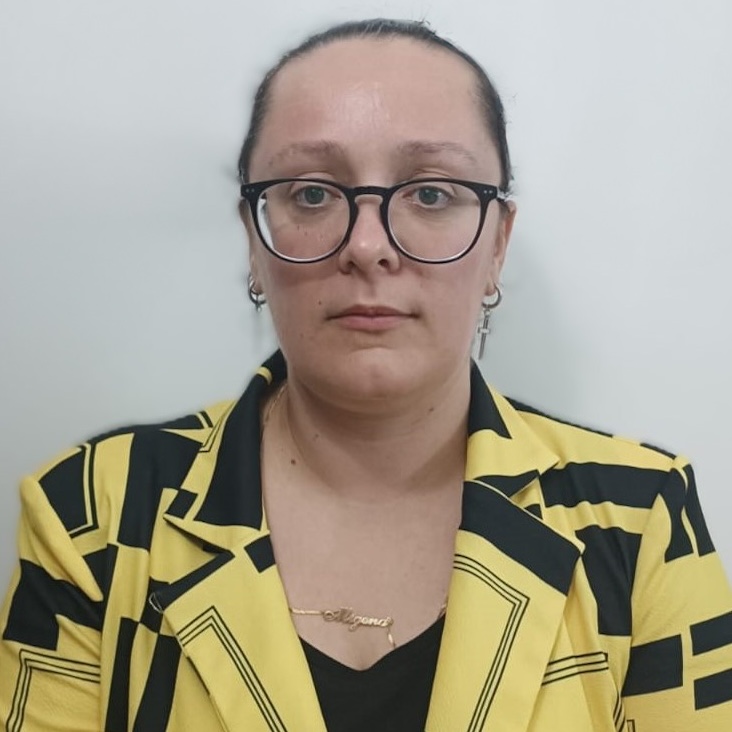
Migena Nako
Migena Nako is a civic practitioner and policy-oriented professional currently working with the Civil Society Development Center (CSDC) Durrës, Qendra Durrësi Aktiv, and Education for Change, where she contributes to initiatives on democratic governance, youth engagement, environmental monitoring, and public accountability.
Previously, she worked with organisations such as the Training Education and Democracy Center (TED) and the EPER Center, where she supported projects on youth participation, civic education, and environmental monitoring, including local-level initiatives on transparency and community engagement.
Her work focuses on strengthening democratic participation, youth empowerment, and evidence-based policymaking, particularly in the context of EU integration and social inclusion in the Western Balkans. Migena holds a Master’s degree in Industrial and Environmental Chemistry and has over a decade of experience in civil society, working across environmental governance, civic education, and regional cooperation initiatives.

Minel Abaz
Minel Abaz worked as a Project Assistant at Mediacentar Sarajevo. Prior to his engagement at Mediacentar, he served as a researcher for the fact-checking platform Istinomjer, a Project Officer at the Network for Building Peace, and a Project Assistant at Save the Children.
He regularly writes and publishes for web portals such as Analiziraj, Prometej, and Izvan Svake Kontrole (ISK). Minel is an alumnus of the Warsaw Euro-Atlantic Summer Academy (WEASA) and the Humanity in Action summer program. In 2022, he was honored with the Journalism Award for contribution to children's rights in BiH, awarded by UNICEF BiH. He holds a Bachelor’s degree in Political Science and a Master of Arts (MA) in Anthropology.

Nikola Ilić
Nikola Ilić is a Junior Researcher at the Faculty of Political Science (University of Belgrade). Previously, Nikola worked as a research assistant on a Horizon Europe project and as a teaching fellow on a course on civic engagement and democracy, contributing to academic research projects and teaching activities. Their work focuses on the study of populism. Nikola holds a master’s degree in political theory from the University of Belgrade, Faculty of Political Science, where he is currently pursuing his PhD in Politics.

Omar Memišević
Omar Memišević is an associate at the Democratization Policy Council (DPC), focusing on hybrid warfare and defense policy in the Western Balkans. He was a Tom Lantos Congressional Fellow, working for an elected member of the U.S. Congress on challenges in foreign policy after which he started focusing more on foreign policy and defense dynamics in the Western Balkans and South Caucasus. He also worked as a political affairs trainee for the Council of Europe in Strasbourg, focusing on political developments and regional cooperation in the Balkans. He is a member of the IRI's Advanced Leadership in Politics Institute (ALPI) and has been a member NATO-Western Balkans Taskforce, working on policy recommendations of the Alliance towards the region for the 2024 NATO Summit. Omar also wrote several policy papers on the regional defense capabilities, including a comprehensive analysis of regional exports of weapons to Ukraine, publishing for outlets such as CEPA, Balkan Insight, and others. He graduated from the University of Sarajevo with a BA in international relations and diplomacy, and he is currently working on his MA thesis, examining the convergence of foreign malign influence and cultural diplomacy in B&H and the Western Balkans.

Radomir Petrićević
Radomir Petrićević is a political scientist and youth activist from Serbia, and the founder of the youth organization Zora, which focuses on youth policy and strengthening youth participation at the local level. He is currently engaged in civic initiatives and grassroots efforts aimed at strengthening youth involvement in democratic processes.
Previously, he worked at Center E8 as a team leader on the “Ide glas” campaign, where he coordinated activists and led local initiatives focused on increasing youth political engagement.
His work centers on youth policy and empowering young people to actively participate in their communities. Radomir holds a degree in Political Science from the Faculty of Political Sciences, University of Belgrade

Sanja Mancheva
Sanja Mancheva is the Head of the Southeastern Europe Chapter at the Lucerne Dialogue and a local expert on deliberative democracy at the Council of Europe. Previously, she served as a coordinating team consultant at the ZIP Institute, where she helped organize the first citizens’ assembly in North Macedonia, overseeing its design, implementation and stakeholder coordination. Her work focuses on democratic innovation, civic engagement and participatory governance, with a strong emphasis on inclusive decision-making and youth empowerment. Sanja is a co-founder of youth organizations such as the Association for Encouraging Youth Cooperation, promoting peace and stability in the Macedonian Community of Alpbach, supporting young professionals across Europe through training and scholarship opportunities, and has contributed to regional initiatives on human rights and democratic resilience. She has completed specialized training with the Council of Europe and at Stanford University.

Tea Dimkovska
Tea Dimkovska is a journalist and podcast host at TV Telma, with a strong focus on student issues and youth politics. She is the founder and former host of the student podcast “Studentski Puls” at Ss. Cyril and Methodius University in Skopje (UKIM), where she also completed her studies. Tea holds a Master’s degree in Media and Public Relations and a Bachelor’s degree in Public Relations, and is currently pursuing a second Bachelor’s degree in International and Intercultural Studies. Through her work, she is committed to amplifying underrepresented voices, fostering youth engagement in public discourse, and encouraging young people to participate in shaping positive youth policies.
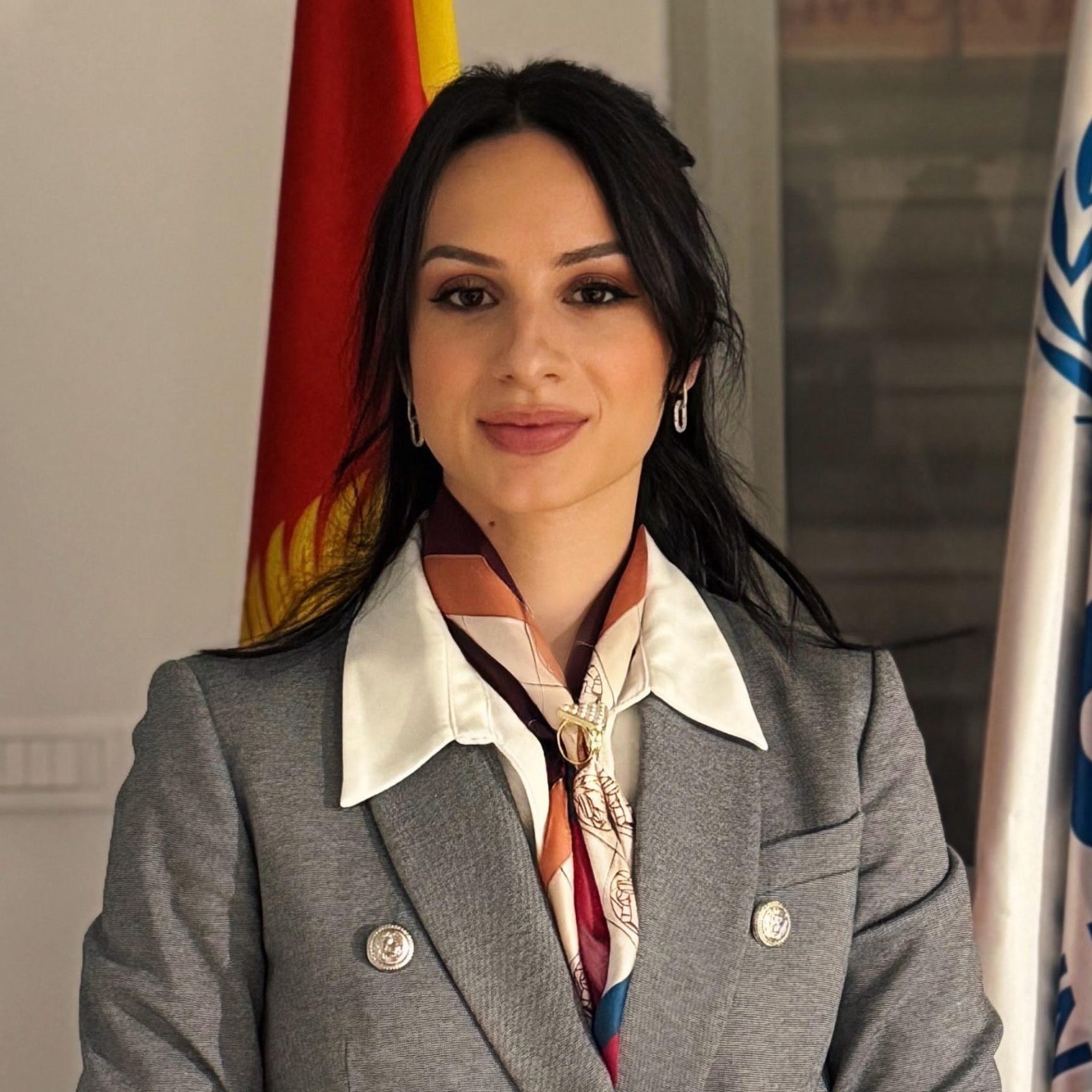
Teodora Lađić
Teodora Lađić is an Executive Associate at the United Nations Resident Coordinator’s Office in Montenegro, where she supports senior leadership in strategic coordination, interagency collaboration, and partnerships across the UN system. Previously, she worked at the United Nations High Commissioner for Refugees (UNHCR) as Senior Executive Support Assistant to the Representative, contributing to external relations, public information, donor engagement, and highlevel communications. She also brings extensive experience from the NGO sector, having served as a Project Manager at the Montenegrin PanEuropean Union, where she led EUfunded and international projects focused on European integration, sustainable development, and youth engagement. Her professional focus spans multilateral cooperation, policy coordination, strategic communications, and development partnerships. Teodora holds a Master’s degree in European Studies (Governance and Regulation) from the University of Bonn and a Specialist and Bachelor’s degree in International Relations from the University of Montenegro.

Zvonimira Jakić
Zvonimira Jakić is a prominent policy professional and civil society leader from Bosnia and Herzegovina, specializing in democratic governance and European integration. She currently serves as the Secretary General of the Paneuropean Union of Bosnia and Herzegovina and Director of the GNRC Europe Hub, where she leads initiatives focused on regional cooperation, youth participation in policymaking, and fostering democratic dialogue across the Western Balkans.
With a distinguished career in policy analysis, Zvonimira previously served as Director of the Foreign Policy Initiative BH, where she managed research on EU accession and public administration reform. Her work bridges the gap between civil society and international institutions, focusing on building democratic resilience and empowering the next generation of leaders to navigate the complex political landscapes of post-conflict governance and regional transformation.

Elena Čavlin
Elena Čavlin is a Master’s student in Political Institutions, Public Administration and Public Service at the Faculty of Political Sciences, University of Belgrade. She is currently a member of the Youth Advisory Board at the Centre for the Politics of Emancipation, contributing to research and analysis within the “Fashioning a Just Transition” project, and works as a Project Coordinator at the National Coalition for Decentralization, supporting pupil-led initiatives promoting fundamental EU values . Previously, she worked as a Programme Assistant at the National Youth Council of Serbia (KOMS), where she supported project implementation, reporting and co-authored a publication on student participation . She was also a host and editor of the podcast Youth Rights Talks at the Belgrade Centre for Human Rights, engaging with regional perspectives on democracy and human rights . Her work focuses on democracy, public policy and youth civic participation, with a particular interest in linking research and advocacy. She holds a Bachelor’s degree in Political Science from the University of Belgrade.
Nina Kurt
Nina Kurt is an accomplished researcher and analyst specializing in international security, diplomacy, and governance. With an International Master’s in Security, Intelligence, and Strategic Studies from the University of Glasgow, she currently holds multiple high-level roles, including Research Assistant at Zayed University, Policy Analyst at WB Consult, and researcher for King’s College London’s GNET project.
Her extensive international background includes fellowships and internships at prestigious organizations such as the UNDP, FINABEL in Brussels, and the European Stability Initiative in Berlin. Dedicated to bridging the gap between academic theory and practical policy-making, Nina focuses on creating impactful policy recommendations and advocating for democratic advancement on local and global scales.

Association for Education and Public Policies
contact@pendarovskicenter.mk