SKOPJE, North Macedonia — The Presidential Center Stevo Pendarovski (PCSP), in partnership with the Open Society Foundations Western Balkans, the Friedrich Ebert Stiftung, and the Zoran Djindjic Foundation, successfully hosted Module 2 of "Echoes of Democracy — A School for Young Professionals in the Western Balkans" on May 21–22, 2026, in Skopje. Under the central motto “Echoes of the Past, Voices for the Future,” this regional initiative brought together the next generation of civic and political leaders from across the Western Balkans (WB6) to strengthen democratic resilience, scale up civic engagement, and foster critical thinking.
A cornerstone of the two-day seminar was a landmark public debate held at Hotel Solun, focused on the theme “Foundations of Democracy and Civic Engagement.” The event marked a historic first for the region, pioneering an open, multi-disciplinary dialogue on how artificial intelligence (AI) and civic technology can be harnessed to deepen public deliberation and expand civic participation at scale.
Scaling Up Deliberative Democracy with Technology
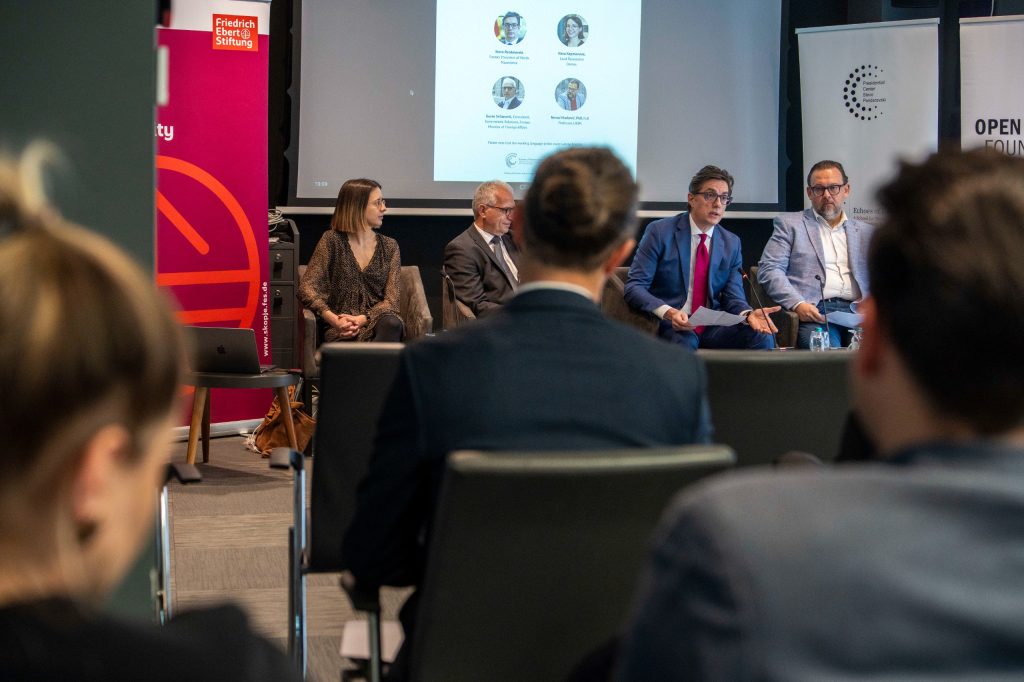
The intensive program kicked off with an official opening and a high-level roundtable featuring former President of North Macedonia Stevo Pendarovski, as well as regional and international experts Goran Svilanović, Dr. Nenad Marković, and Ms. Hana Kapetanovic.
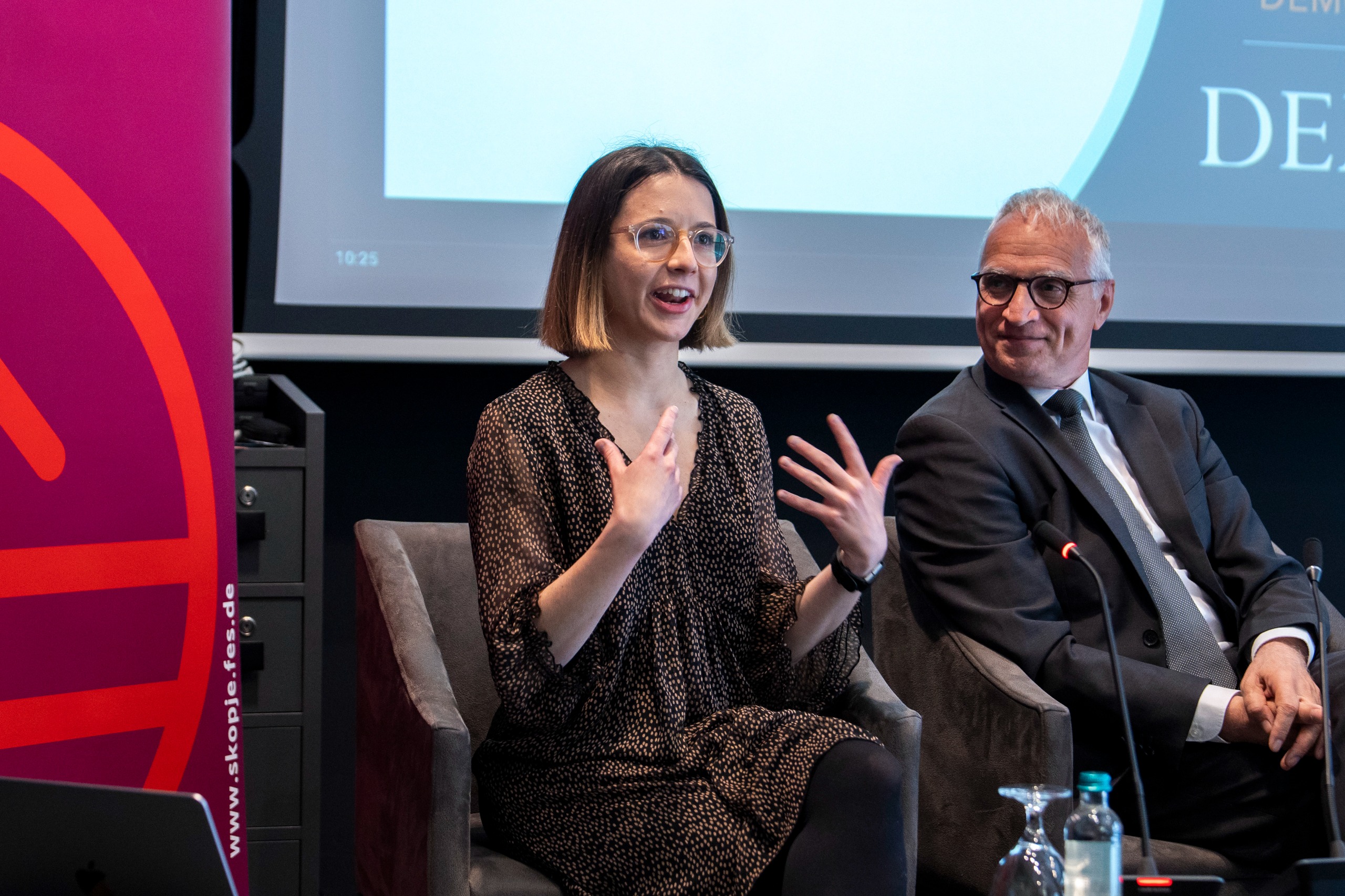
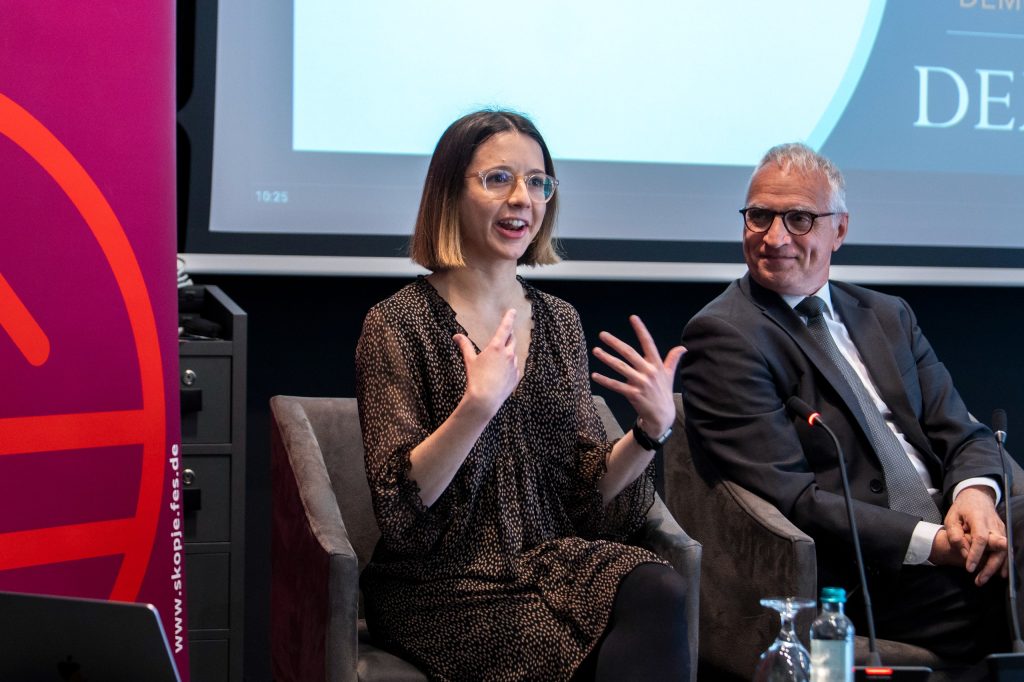
The technical and practical dimensions of expanding public participation were leading themes of the first session, presented by Hana Kapetanović, Lead Researcher at the UK-based cross-party think tank Demos. Kapetanović introduced "Waves," an innovative civic technology program designed to scale up public deliberation. Addressing the global and regional "democratic emergency"—characterized by declining public trust and severe political polarization—she emphasized that traditional consultations are often outdated and frustrating. While traditional public deliberation (such as Citizens' Assemblies) yields highly effective, consensus-driven outcomes across deep divides, it is historically limited by high costs and small group sizes.
The "Waves" methodology uses civic technology to bridge this gap, allowing local authorities and public bodies to involve thousands of residents in structured, evidence-based policymaking at a fraction of the time and cost. Kapetanović detailed successful precedents, such as the 2021 Mostar Citizens’ Assembly on public spaces, demonstrating how these platforms can be effectively applied to divisive or politically stuck issues in the Western Balkans, provided there is genuine political buy-in and a clear commitment to implement public recommendations.
Confronting Geopolitics and Political Mythology
The afternoon sessions shifted toward the broader structural and cultural barriers to democratic consolidation. Goran Svilanović, former Minister of Foreign Affairs and current Government Relations Consultant, delivered a high-level analysis of regional cooperation and the specific obstacles impeding Euro-Atlantic integration for the WB6. Svilanović noted that building robust institutions requires more than political will; it demands an active citizenry that recognizes and exercises its own democratic power.
Following this, Dr. Nenad Marković, Full Professor at the Saints Cyril and Methodius University (UKIM) in Skopje, delivered a compelling presentation titled "The Architecture of Belief: Political Mythology and Civil Society in the WB." Dr. Marković deconstructed how high levels of political polarization across Southeast Europe—driven by historical cleavages, war legacies, and media echo chambers—immobilize broader social action. He highlighted that social media and AI tools can often worsen polarization if unchecked.
"Political mythology is perhaps the greatest obstacle to democratic consolidation in our region," Dr. Marković warned. He noted that teaching young professionals to critically examine the narratives that shape regional political behavior is a necessary catalyst for genuine democratic progress. Critiquing common misconceptions about youth apathy, he emphasized that socio-economic challenges, job insecurity, and corruption are what truly shape youth attitudes.
Gen Z and the Generational Shift in Leadership Culture
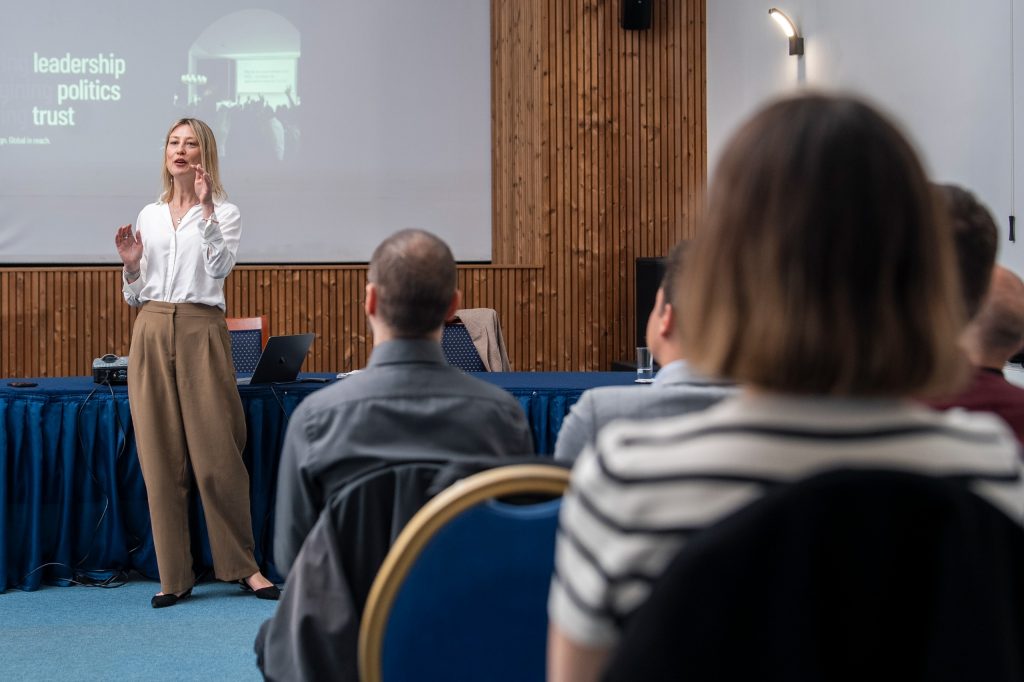
Day two of the module centered on a cultural and generational revolution, led by Dr. Milena Stefanović, Assistant Professor at the University of Arts in Belgrade. Her session, "Leadership and cultural codes in the WB: from national culture index to generational revolution," examined the region through the lens of Hofstede’s cultural dimensions. Dr. Stefanović provided recent 2026 statistics showing that Western Balkan nations traditionally score extraordinarily high on the Power Distance Index (PDI)—with North Macedonia, Albania, and Bosnia and Herzegovina leading at 90—which has historically correlated with a tolerance for centralized, authoritarian, or paternalistic leadership styles.
However, Dr. Stefanović demonstrated how Generation Z is actively "hacking" this traditional model. Driven by values of radical honesty, authentic purpose over high pay, and an inherent demand for social justice, regional youth are shifting the core societal emotion from a "culture of humiliation" and fear toward a "culture of hope" and dignity.
Illustrating this shift with empirical case studies from recent student movements, she outlined how bottom-up re-democratization can succeed by avoiding rigid ideologies, focusing on shared values, and utilizing digital networks and local collective deliberation models (such as ZBOR). Recent data marks an unprecedented cultural turnaround: a sharp increase in youth confidence in democracy, combined with a major drop in the perceived need for a "strong leader." Gen Z leaders favor "Servant Leadership"—seeking inspiration and shared ownership rather than command-and-control tactics.
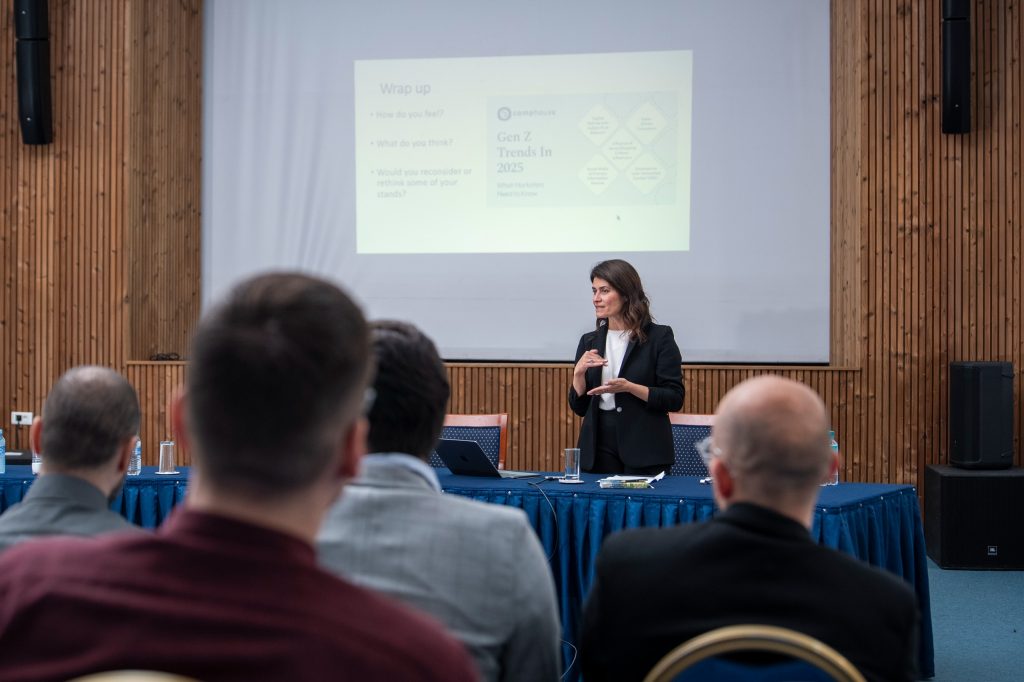
The module concluded with a practical session on "The Resilient Leader," guided by Kimberly McArthur, COO of Better, who addressed the psychological toll of political life, ethical decision-making, and coping mechanisms for navigating high-stakes polarization.
A Radical Step Forward for the Euro-Atlantic Journey
By combining technical training in civic tech with deep cultural and political analysis, Module 2 of the Echoes of Democracy political school provided participants with a profound understanding of their role in transforming the region. As regional leaders noted throughout the event, empowering the next generation to critically dismantle the past while utilizing cutting-edge democratic tools is not just complementary to the Western Balkans' Euro-Atlantic journey—it is entirely essential to it.