SKOPJE, North Macedonia — The Presidential Center Stevo Pendarovski (PCSP), in collaboration with the Open Society Foundations - Western Balkans, Friedrich-Ebert-Stiftung Skopje, and the Fondacija dr Zoran Đinđić, officially launched the "Echoes of Democracy" political school for young professionals in the Western Balkans with its first intensive module in Skopje. The initiative serves as a vital platform for critical dialogue, bringing together emerging regional leaders to debate the future of the Western Balkans within the European Union family.
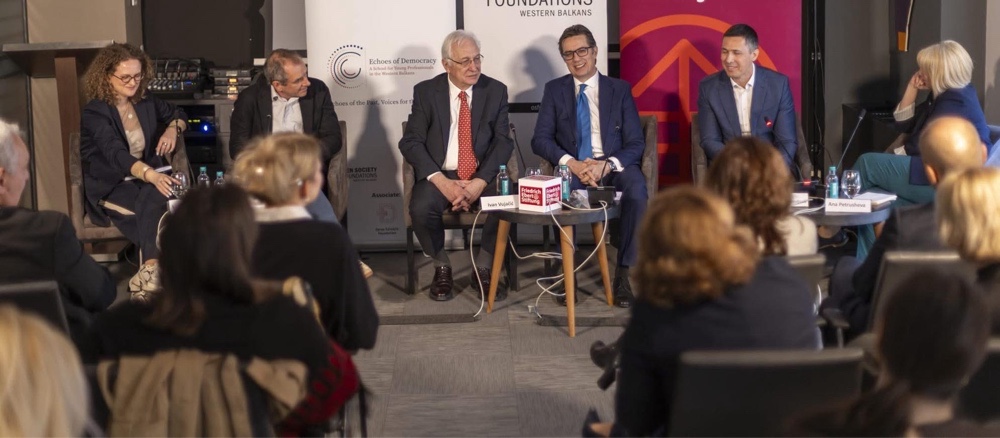
A central highlight of the module was a high-level public debate titled "The Western Balkans' Path Forward," where participants and regional experts explored how the war in Ukraine is fundamentally reshaping the discourse on EU membership—shifting it from a rigid, technical process to an urgent strategic and geopolitical necessity.
Geopolitical Openings and Internal Regressions
Opening the session, former President of North Macedonia Stevo Pendarovski emphasized that the shifting continental landscape has placed regional stability and EU integration at the very forefront of the European security agenda. Pendarovski observed that the war in Ukraine has fundamentally altered the EU's traditional approach to enlargement. He noted that the Union is currently "imitating NATO" by prioritizing immediate geopolitical stability over traditional democratic and technical criteria.
While this conflict has opened a significant "window of opportunity" for the Western Balkans, Pendarovski cautioned that this shift has occurred without the EU first completing its own necessary internal reorganization. Furthermore, he expressed concern that regional democracies are currently regressing rather than advancing, raising a critical question for the next generation: will the Brussels bureaucracy simply return to its decades-long practice of delaying expansion once the war concludes?
Single Market Pragmatism vs. Institutional Lethargy
The debate featured deep-dive analyses from prominent regional experts who weighed the structural opportunities and obstacles currently defining the European pathway.
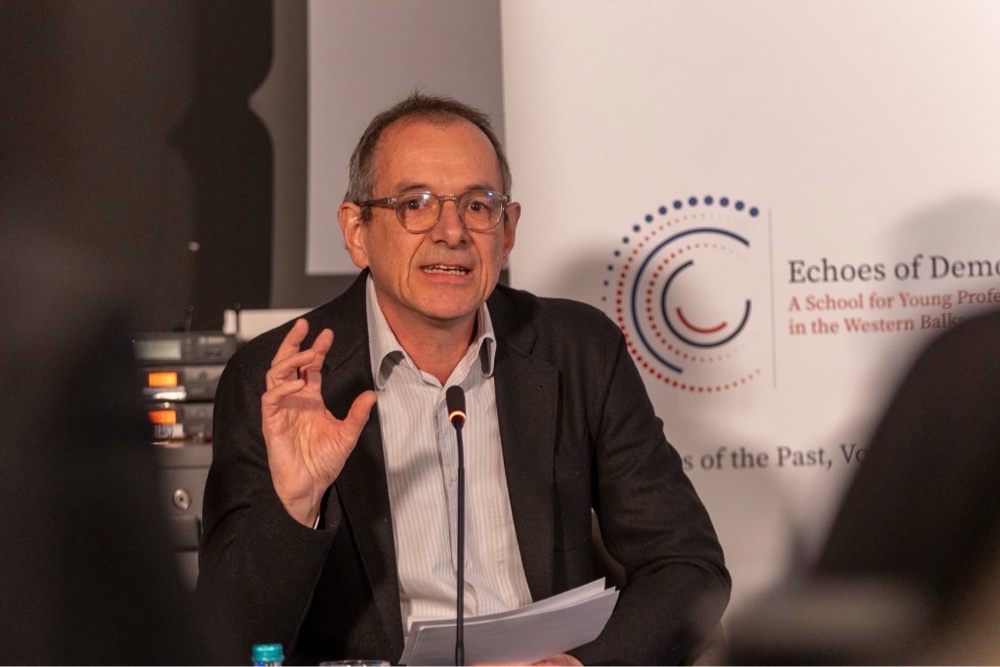
Kristof Bender, representing the European Stability Initiative (ESI), proposed that the most viable and pragmatic "path forward" for the Western Balkans is through phased integration into the European Single Market. Bender argued that because this model requires alignment with roughly 70% to 80% of EU legislation, it offers a functional solution that bypasses the need for unanimous political decisions from all member states. This framework, he noted, could effectively set aside paralyzing bilateral disputes in favor of tangible economic readiness.
In contrast, Professor Ivan Vujačić delivered a candid, sobering assessment of the current Euro-integration dynamic, describing it as a state of deep "lethargy" where both sides are merely going through the motions. Prof. Vujačić noted that a cycle has formed where Western Balkan countries "pretend" to implement reforms, while the EU "pretends" to believe them while constantly inventing membership alternatives. He stressed that this cycle must end if the Union is to remain a true bastion of liberal democracy and stay competitive against global powers like the United States and China.
Internal Integrity and Fostering a New Generation
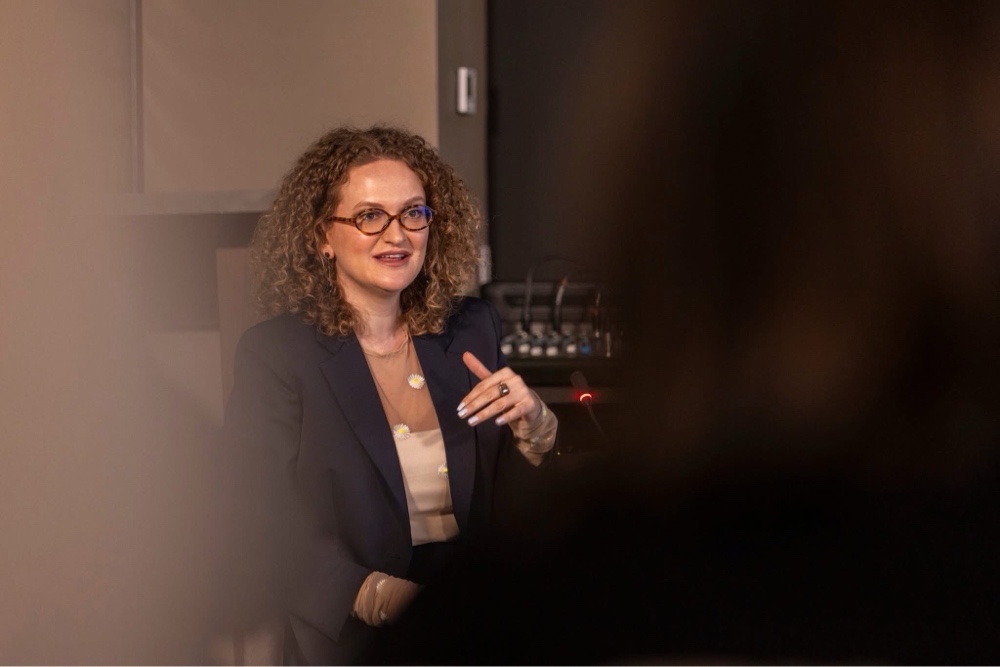
The panel also heavily emphasized the necessity of building internal democratic resistance rather than relying solely on external geopolitical shifts. Ms. Lura Pollozhani focused her insights on the urgent need for robust institutional integrity across the Western Balkans. Pollozhani emphasized that the region must navigate the complexities of the current European pathway by strengthening its internal democratic structures from the inside out, making them resilient enough to resist external pressures and ensure long-term regional stability.
Representing the Open Society Foundation - Western Balkans, Miodrag Milosavljevic highlighted that navigating these technical and political hurdles requires a sustainable, human-centered approach. He underscored the vital importance of fostering a new generation of young professionals who are uniquely equipped to handle the modern challenges of EU integration. Milosavljevic reminded the school's participants that the pathway to Europe is not just a high-level political journey, but one that demands deep-rooted regional cooperation and the active, unyielding participation of civil society to secure a stable and prosperous future.
Walking the Talk for the Region
By addressing the intersection of wartime geopolitics, economic integration strategies, and the domestic regressions facing the WB6, Module 1 established a firm foundation for the "Echoes of Democracy" school. The public debate reinforced a collective conclusion: to meet current global challenges, the region cannot merely wait for a changing Brussels bureaucracy—it must actively reinforce its own institutional integrity and democratic resilience on the ground.